
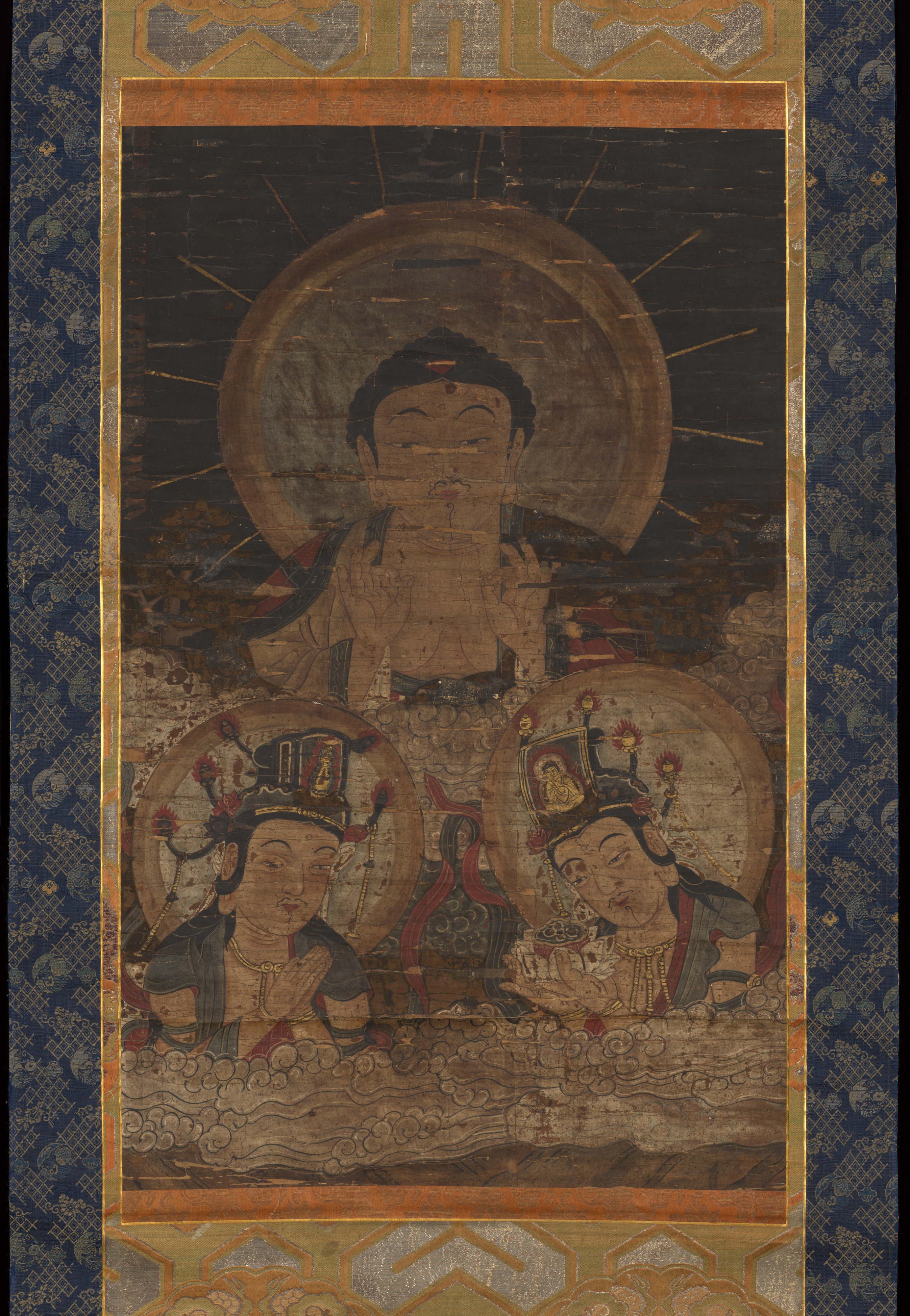
The painting depicts a central figure with a large halo, surrounded by two smaller figures each with their own halo. The central figure has dark hair and a neutral expression. He wears a simple outfit with a sash around his waist. The two smaller figures have dark hair, and wear ornate headdresses and detailed outfits. They are positioned on either side of the central figure. The background of the painting features a gradient from black at the top to clouds at the bottom. A gold border surrounds the painting, with a patterned blue and gold frame on the outside.
Artwork details
- Date:
- 16th–17th century
- Medium:
- Hanging scroll; ink and color on paper
- Culture:
- probably Japan
- Dimensions:
- 432 × 625 px
- Museum record:
- View original
You May Also Like

Amitābha Triad

The Secret Five Bodhisattvas (Gohimitsu Bosatsu)

Shaka (Shakyamuni), the Historical Buddha, with Two Attendant Bodhisattvas and the Ten Great Disciples

Amitabha triad

Shaka (Shakyamuni) Triad

Assembly of Buddhist Deities

Page of a Pilgrim’s Visiting Album

Welcoming Descent of Amida and Bodhisattvas

Kannon

Welcoming Descent of Jizō

Pu Xian on Elephant

Monju as a Child (Chigo Monju)

Amitabha and Kshitigarba

Shaka (Shakyamuni), the Historical Buddha, with Two Attendant Bodhisattvas and Sixteen Benevolent Deities

Standing Ksitigarbha

Buddha Shakyamuni and Scenes of His Previous Lives (Jataka Tales)

Fujiwara no Kamatari as a Shinto Deity

Shakyamuni with two attendants

Hossō Mandala

Seated Amitābha

Descent of Eleven-Headed Kannon

The Bodhisattvas of the Ten Stages in Attaining the Most Perfect Knowledge

Buddha Amitābha with Two Attending Bodhisattvas

Eleven-Headed, Thousand-Armed Bodhisattva of Compassion (Avalokiteshvara)