
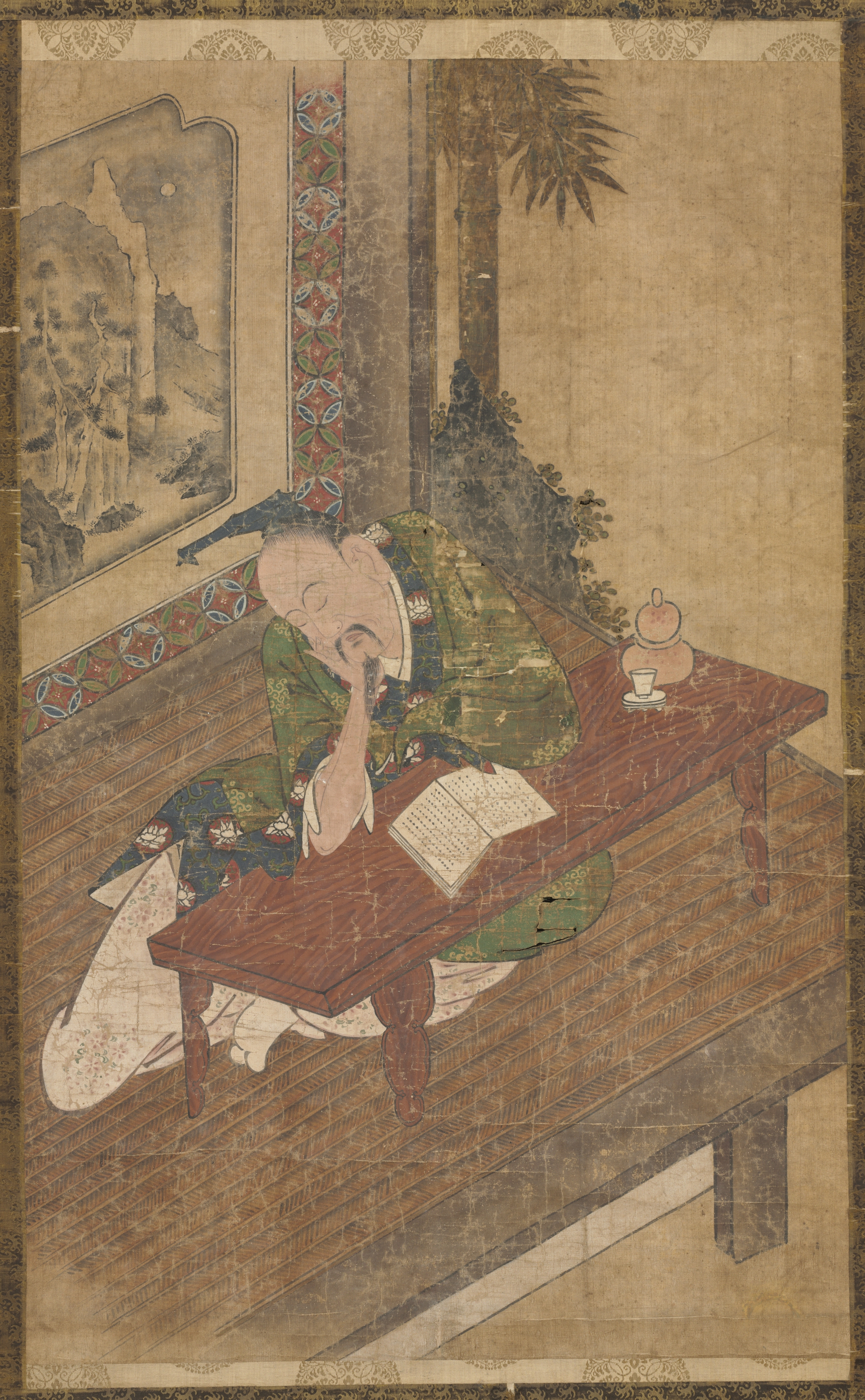
Sleeping Poet
A man in a green robe with a white undershirt and white pants sits on the floor at a low wooden table. The man rests his head on his hand on the left. An open book sits on the table to his right. A teacup and teapot are on the right side of the table; there are plants in the background on the right. A painting on a wall to the left depicts a figure in a long dress and a landscape. The walls have patterned borders; the image has a darker border. The title is "Sleeping Poet".
Artwork details
- Dimensions:
- 552 × 893 px
- Museum record:
- View original
You May Also Like

Courtesan Dreaming of the New Year Procession

Blue Shell (Aogai), from the series "Five Colors (Goshiki no uchi)"

Evening Cool on the Verandah (Ensaki no yusuzumi): Genre scenes with kyoka poems, in aiban format (Kyoka-iri aiban fuzoku zu)

Paragons of Filial Piety (from a set of twenty-four)

Portraits of members of a family

Zhuangzi (Japanese: Soshi), from the series "Shunshoku ressenkyo"

Hotei, from the series "The Seven Gods of Good Luck in Modern Life (Ukiyo shichi fukujin)"

Man Seated With His Reading and Writing Materials before Him

The Matsukaze Chapter of the Tale of Genji (from the series The Tale of Genji in Elegant Modern Dress)

Illustrated Biography of Hōnen (Shūikotokūden-e)

Woman and attendant at entrance gate of Enoshima

Poem by Fujiwara no Teika, from the series "Yoshiwara Courtesans in the Three Evenings (Yoshiwara keisei sanseki)"

Hanging a Painting (parody of the Third Princess)

Seated Official

The Actor Ichikawa Komazo I in his rice cracker shop

Young Woman Seated on a White Elephant (parody of the Bodhisattva Fugen)

A turner and his assistant, from the series "Thirty-six Poets as Craftsmen (Shokunin sanjurokuban)"

Young Women Playing Cat’s Cradle (Ayatori)

New Year's Scene

The Letter

Parody of the play "Musume Dojoji"

Two Women and a Girl Feeding a Crane at the Verandah

Courtesan and Kamuro Strolling at the Entrance Gate of the Yoshiwara Pleasure Quarters

Courtesan and Her Sleepy Attendant