
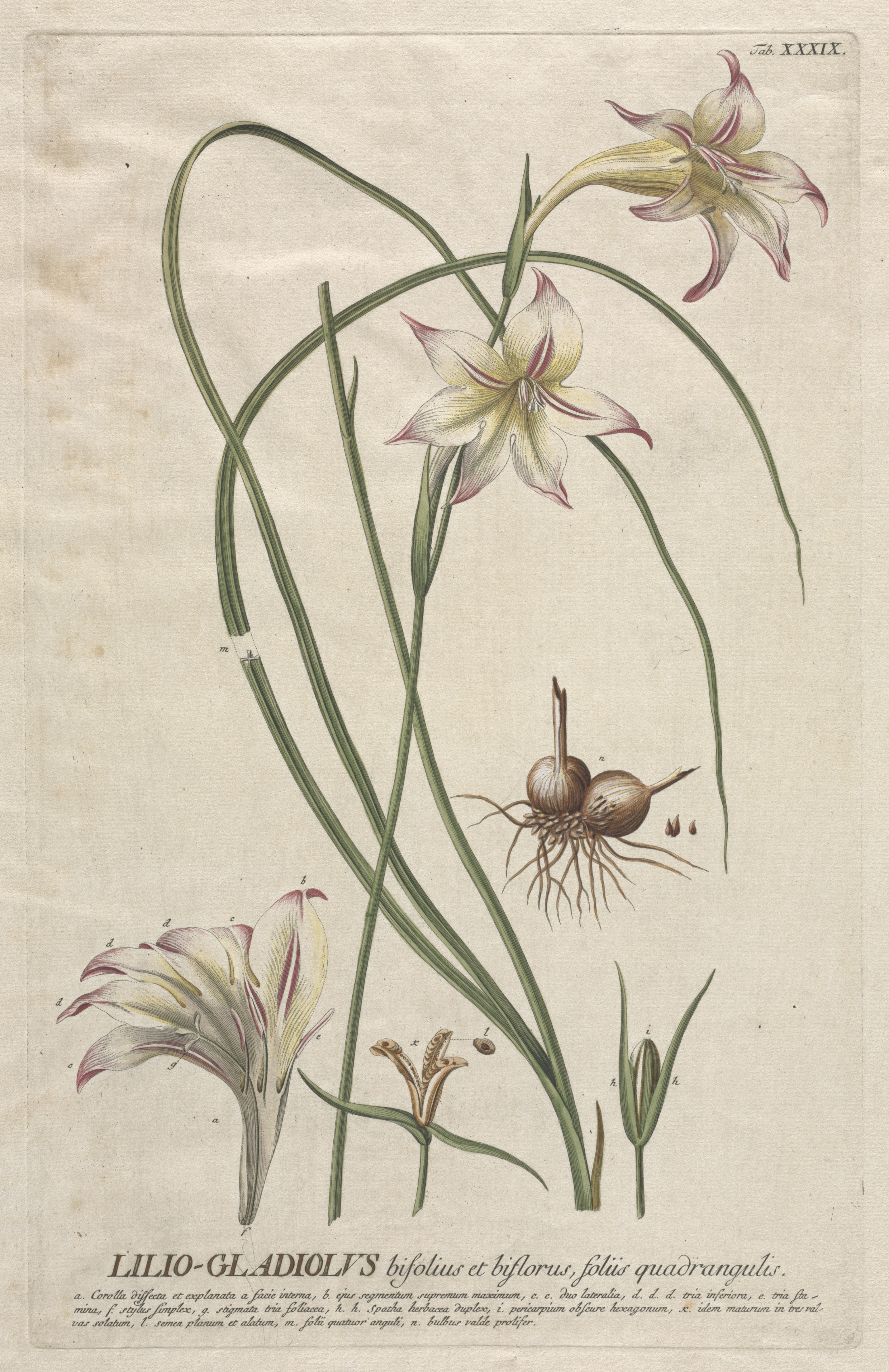
The image shows a plant with long, thin green leaves and white flowers that have pink edges. The plant has a bulbous base with roots. There are two large flowers and one smaller one on the left. The flowers have six petals. A cutaway section shows the bulb and roots. The background of the image is beige. There is text at the bottom and top right. The text at the bottom is in a foreign language. The top right says "Tab XXXIX" in small letters.
Artwork details
- Dimensions:
- 579 × 893 px
- Museum record:
- View original
You May Also Like

Plantae Selectae: No. 52 - Ixia

Double Narcissus and Single Narcissus, folio 26 (recto), from Florilegium (A Book of Flower Studies)

Fritillaria Meleagris and Ranunculus, folio 26 (verso), from Florilegium (A Book of Flower Studies)

Lillium Pomponium (Turban Lily), plate 7 from Les Liliacées

Les Liliacées: Amaryllis Lutes

The Botanical Magazine or Flower Garden Displayed: The Mountain Lake Lily

Les Liliacées: Ornithogalum longibracteatum

The Temple of Flora; or Garden of Nature: White Lily with Variegated Leaves

Crocus, folio 34 (recto), from Florilegium (A Book of Flower Studies)

Gold-banded Iris

Phytographia Curiosa: Horminum Indicum Majus

Plantae et papiliones rariores: No. 9

Plantae Selectae: No. 37 - Yucca

Cours d'Histoire Naturelle, contenant les principales espèces du règne animal, classées methodiquemenet: Iris, African-hemp and Ketmia

Tulips and Snail with Dog and Hare Border, folio 7 (verso), from Florilegium (A Book of Flower Studies)

Cours d'Histoire Naturelle, contenant les principales espèces du règne animal, classées methodiquemenet: Martynia or Unicorn Plant

Plantae Selectae: No. 11 - Lily

The Botanical Magazine or Flower Garden Displayed: White Cape - Coast Lily

Belladonna Lily: Amaryllis belladonna

The American Cowslip, Plate 26

The Temple of the Flora: American Bog Plants

The Temple of Flora, or Garden of Nature: The White Lily with Variegated Leaves

Dianthus with Periwinkle Border, folio 21 (verso), from Florilegium (A Book of Flower Studies)

Les Liliacées: Crocus Sativus